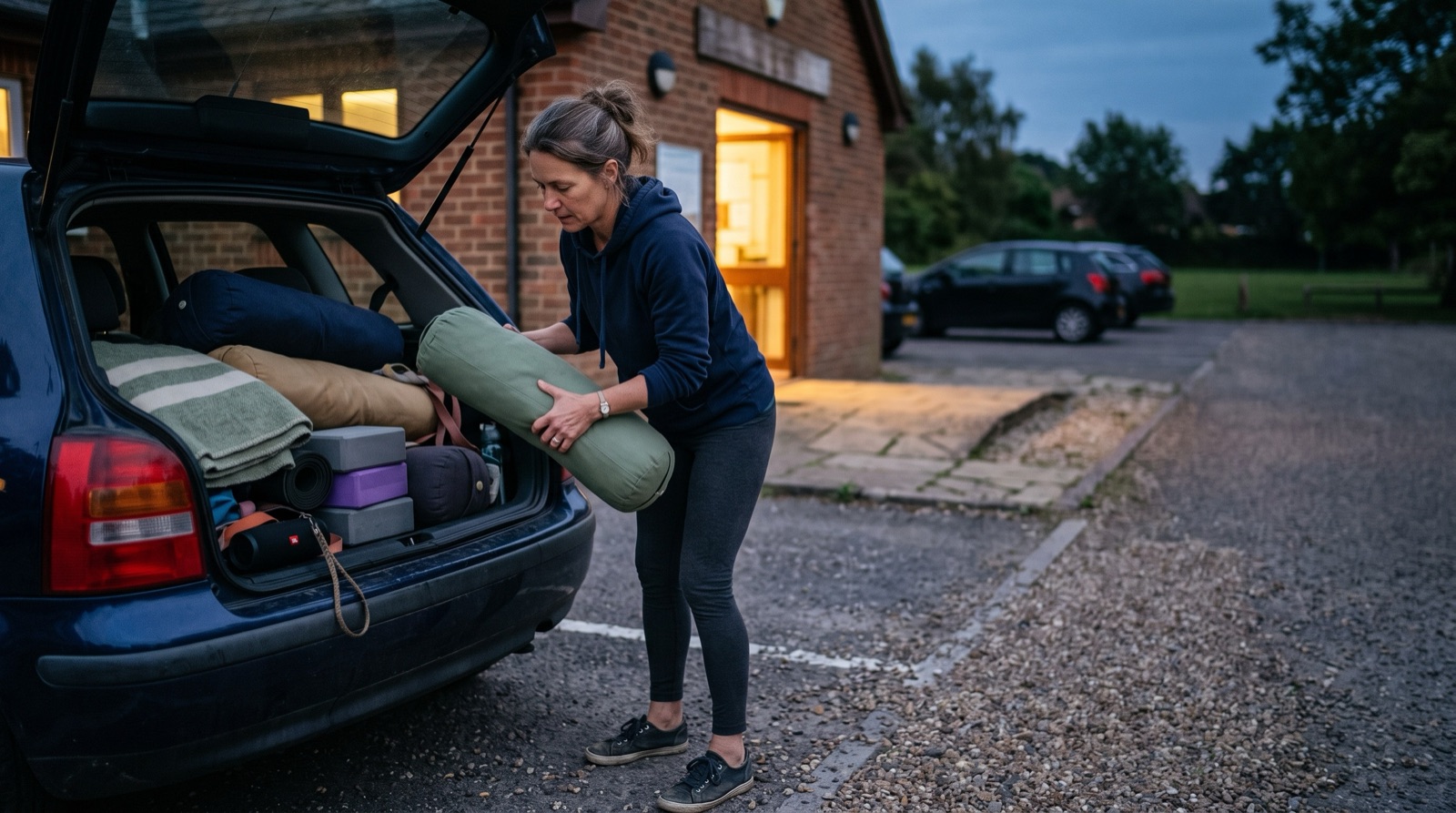
- Teaching is physical work even in the stiller styles. Voice, joints and attention are the equipment, so a teacher’s energy belongs on the professional list alongside insurance and CPD.
- Sleep is the first lever. A fixed wake time, the same every day, is the anchor sleep researchers keep returning to; run short and the first things to go are patience and attention, the two things a class spends most.
- Morning daylight sets the body clock. Ten minutes outside before the screens makes that night’s sleep easier and softens the afternoon dip.
- Demonstrating is not moving. One hour a week of movement where you are nobody’s teacher refills what your cueing draws from.
- Water is the dullest lever and the fastest to act: mild dehydration dips concentration and mood before thirst registers. A bottle refilled between classes is the whole intervention.
- Breath is the lever the profession already owns. A longer exhale than inhale settles the nervous system within minutes; two minutes in the car park keeps the day’s residue out of the room.
Yoga teachers keep their energy up by looking after the body that does the work, week after week. Not with willpower, which is gone by Thursday. With maintenance, which is dull and does the job. Sleep does most of it. Morning daylight helps. So does an hour of real movement that has nothing to do with teaching, water through the day, and two slow minutes of breathing before you walk in. YogaPros files a teacher’s energy where it belongs, next to insurance and CPD.
By YogaPros — the professional body for yoga teachers since 2006, with more than 10,000 members across 100+ countries.
Why do yoga teachers run out of energy?
Every trade looks after its tools. The chef keeps the knives sharp. The mechanic services the van before it leaves someone stranded on a motorway. Yoga is the odd one out, because the tool is also the person holding it, and that person is usually last in the queue for looking after.
The class gets made out of you, on the day. Your voice runs for an hour or more. Your body demonstrates. Your attention sits on other people the whole time, never on yourself. That has a running cost, and your training probably never mentioned it. By the last class of a long day there isn’t much left in the tank, and teachers are very good at teaching on empty. That’s half the problem, really. The empty version of you still gets through the hour. But the cues get shorter. The adjustments stop coming. And the person on the back mat, the one who actually needed watching, gets less of you than a rested you would have given them.
Think of yourself as the equipment, because that’s what you are. Leave a violin in a hot car all summer and nobody’s shocked when it won’t hold its tune. Teachers do roughly that to themselves across a whole term, then feel guilty when the class goes flat. Most jobs let you put the tools down at the end of the day. Yours comes home, cooks the dinner and gets up at six.
None of this makes you fragile. It makes you the equipment, which is a more useful thing to know about yourself. The profession looks after everything else carefully. Qualifications kept current. Cover in place. The body that actually delivers the class comes last, mostly because it’s the part that complains least, right up until it stops.
How can a yoga teacher keep their energy up during the week?
Five habits, and every one of them is boring. That’s the point. Maintenance works because it’s dull and you can repeat it.
Sleep first, because the research doesn’t hedge. Run short on it and the first things you lose are patience and attention, which happen to be the exact two things a class spends. The thing sleep researchers keep coming back to is a fixed wake time: the same hour every morning, teaching day or not. Get that steady and the rest tends to follow, bedtime and all.
Daylight next. Morning light sets your body clock, and the science on this is solid as long as you keep the dose small. Ten minutes outside before you look at a screen, cloud or no cloud. You’ll sleep easier that night and dip less in the afternoon.
Movement, and this one stings. Demonstrating isn’t moving. Eight half-postures dropped between cues, always on your good side, is neither a practice nor a workout. Your body needs an hour a week where you’re nobody’s teacher. A swim. The back row of someone else’s class. It also tops up the well your cueing draws from, because a body that only ever demonstrates slowly runs out of anything fresh to say.
Water is the dullest one and the quickest to show. Teaching is hours of talking in warm rooms, and the studies on hydration find your concentration and mood slipping with even mild dehydration, before thirst has said a thing. A bottle in the bag, topped up between classes, is the whole of it.
Then breath, the one you already own. Slow breathing with a longer exhale than inhale settles the nervous system inside a few minutes, and the modern studies mostly just confirm what pranayama worked out a long time ago. Two minutes of it in the car park keeps the day’s residue out of the room. You teach this every week. The only new part is turning it on yourself.
Which habit should you start with?
Pick one. Don’t try to fit all five in this week, because that’s the surest way to keep none of them. Take the single lever that stung a bit as you read it, and run it for a fortnight. The others can wait their turn. Maintenance is a rota, and rotas work precisely because they’re unexciting.
You’ll have noticed food isn’t on the list. That’s deliberate. We’ve stuck to things with clear evidence behind them. How you eat matters, and it matters differently for different people, so it sits with you and your GP, not in a handout like this one.
Why does looking after your energy count as professional?
Because your body is the working equipment of the job, and looking after equipment is part of the work. It isn’t a reward you get for surviving the week. Nobody calls servicing the car an indulgence. Nobody thinks a studio’s being precious when it looks after its floor.
Part of your career already runs on this kind of quiet upkeep. The insurance behind your teaching gets renewed on time every year, because the work depends on it. The body that delivers the work deserves the same level of attention. It’s the least glamorous line on the professional list, and quietly one of the things holding the most up. Put your energy on that list, and the career you’ve built is far likelier to still be there in ten years.
Members go deeper. YogaPros members can read the full version of this piece in the Learning Hub, with a one-page maintenance sheet for choosing your first lever and running it for a fortnight. It’s part of the Wellbeing & Mindset collection: practical support for the working life of a yoga teacher, not the performance of calm.